.jpeg)
If you’ve ever tried returning to workouts after pain—or a full-on injury—you know the mental
tug-of-war that comes with it. On one hand, you want to move again. You miss feeling strong,
capable, and energized. On the other hand, there’s that fear: What if I make it worse? What if I
undo all the progress I just made?
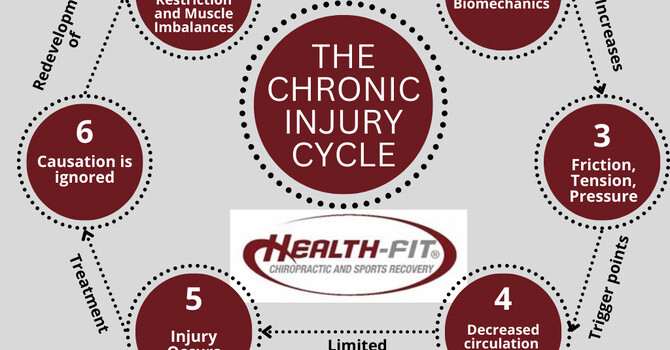
That’s exactly where most people get stuck: in the frustrating loop of rest → feel better → do
too much → flare up → repeat. And it’s why simply “waiting it out” isn’t always the solution.
What you often need is a smarter bridge between recovery and real-life movement—a way to
rebuild strength with structure, confidence, and measurable progress.
The Real Problem Isn’t Exercise… It’s Guessing
One of the biggest challenges when you return to training after pain is the lack of feedback.
You’re left guessing:
● Is my right side doing more work than my left?
● Am I moving through the same range of motion as before?
● Is this discomfort “normal” or a warning sign?
● Am I progressing… or just surviving my workouts?
This uncertainty is where people tend to either push too hard too soon or avoid strength
altogether. And neither leads to long-term resilience.
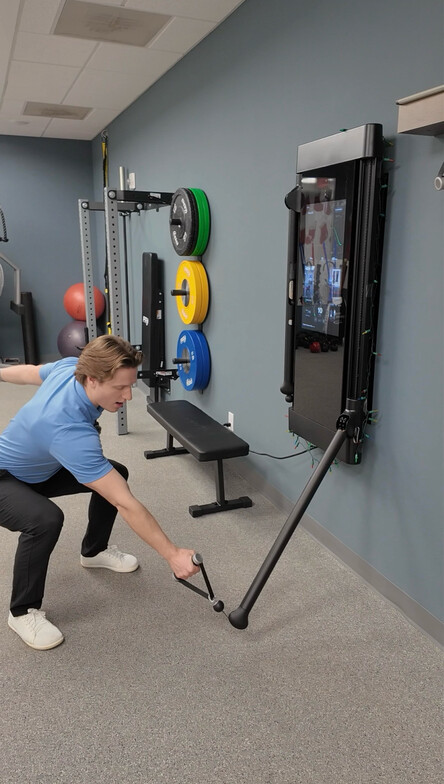
That’s why we’re integrating a new training-and-rehab system in the clinic designed specifically
to help people return to movement safely and confidently. It’s built to bridge the gap between
early rehab and full return to activity—whether your goal is getting back to the gym, Pilates,
yoga, running, or just feeling stable and strong in your body again.
What Makes This Approach Different
The key difference is this: it combines guided movement with real-time feedback and
adjustable loading.
Instead of guessing what your body can tolerate, the system tracks useful performance data
while you move—things like range of motion and power output. That information matters
because it can reveal patterns you may not feel yet, like:
● One side compensating for the other
● Weakness or reduced control after injury
● Range restrictions that could create strain elsewhere
● Progress over time that you can actually measure
And because resistance can be adjusted in small, precise increments (including from different
start positions), training can be matched to how you feel that day without losing structure.
That’s crucial for tendon and muscle resilience—especially when recovering from common
overuse flare-ups like elbow pain, knee irritation, and Achilles discomfort.
Why Elbow Pain is a Perfect Example
Take pickleball or tennis elbow. That familiar “zing” on the outside of the elbow might seem like
an elbow-only problem—but most stubborn cases aren’t.
Outer elbow pain is often tied to how your entire chain works together: shoulder stability, wrist
and grip capacity, and rotation through the mid-back (thoracic spine). When one part isn’t
doing its share, the elbow becomes the “complainer.”
That’s why our approach isn’t about pushing through pain. It’s about restoring function and
building tolerance through the joints and muscles that support the elbow—so you can return to
your sport with confidence instead of fear.
The Bigger Picture: Strength = Longevity
Here’s the truth people overlook: rebuilding strength isn’t just about getting back to the gym—it’s
one of the strongest predictors of healthy aging.
Maintaining skeletal muscle supports joint health, stabilizes the spine, improves balance, and
keeps you active longer. It’s one of the most powerful investments you can make in your
healthspan—not just your lifespan.
But it has to be done sustainably.
Ready to Train Smarter?
If you’ve been stuck in the cycle of flare-ups, uncertainty, or fear of re-injury, this is your sign that
you don’t have to guess your way back. With structured progression, real-time feedback, and
smart loading, you can rebuild strength safely—and stay active for the long haul.
If you’d like help creating a plan that fits your body and your goals, we’re here to guide you.
.jpeg)